
Introduction
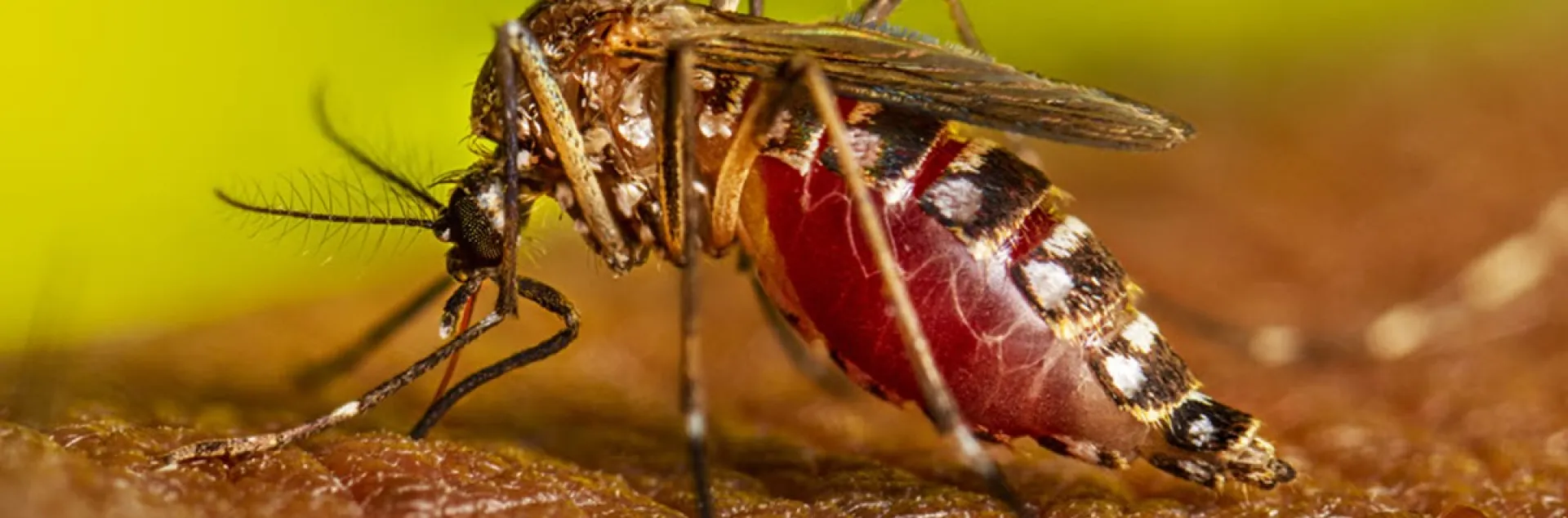
Mosquitoes are not just pesky biters that may cause allergic reactions; they can be vectors (that is, they transmit parasites) for worrisome diseases that may cause severe health problems and even death. Mosquito-borne diseases caused by protozoa (very small, single-celled organisms that are parasitic in this case) and several types of viruses that used to be endemic (that is, native and restricted) to equatorial and tropical areas. These diseases now have an ever-extending range outside of these areas, due to environmental changes and mosquitoes’ ability to adapt to new and varied conditions. One such example is the invasive Aedes aegypti, also called “Yellow Fever mosquito” or “Dengue Fever mosquito”, which has been detected in Alameda County. While the Alameda County Mosquito Abatement District (ACMAD) is responsible for abating mosquitoes on a large scale and for educating the public, the District relies on the public to detect and report mosquitoes, especially Aedes aegypti.
Aedes aegypti in Alameda County
Aedes aegypti, along with Aedes albopictus mosquitoes, are vectors for the following diseases: Dengue Fever, Yellow Fever, Zika Fever, and Chukungunya. These mosquitoes have invaded California before, but were eliminated before spreading too far from their introduction site. However, both species were detected in California again in 2011 (Ae. albopictus) and 2013 (Ae. aegypti). Ae. aegypti is of particular concern because it is now found in Alameda County, specifically in Livermore, Pleasanton, Dublin, and Fremont. Additional information about these diseases can be found in Resources below.
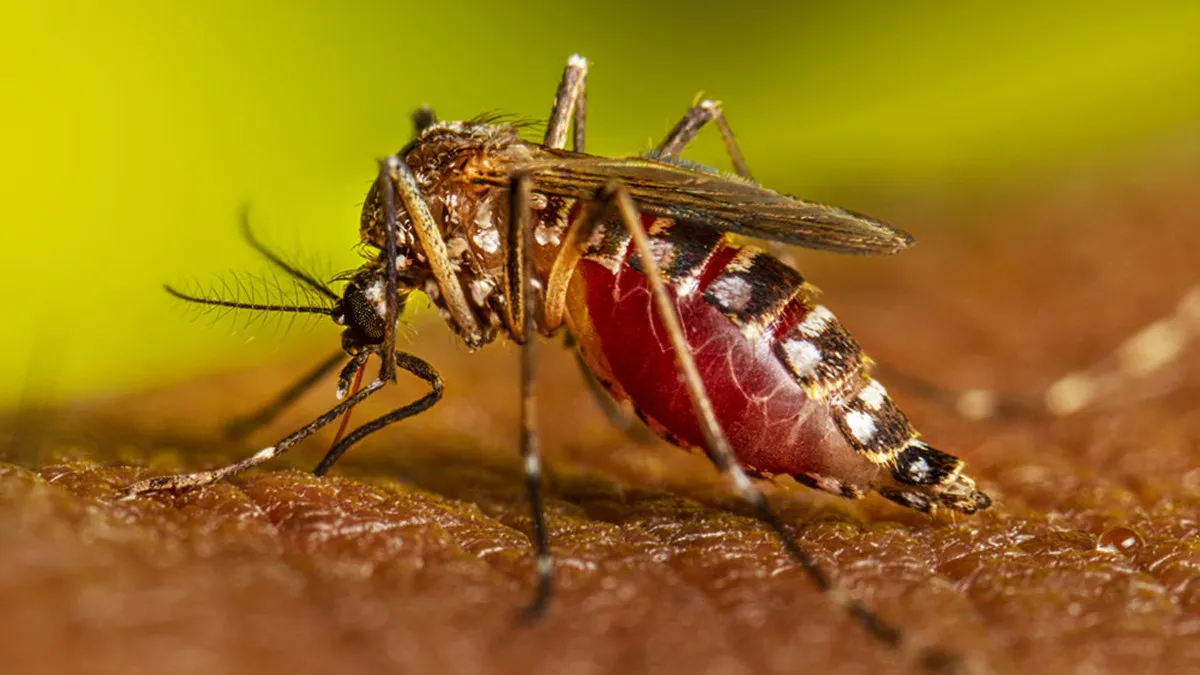
Aedes aegypti is particularly dangerous because females preferentially prey on humans to obtain proteins and iron for egg production and development. Besides being a vector for dangerous and potentially lethal viral diseases, Aedes aegypti is hard to control because of its ability to adapt to indoor and outdoor human environments and its ability to avoid detection. It is therefore important to control mosquito activity with a combination of strategies: identification and detection, exclusion, appropriate clothing, appropriate repellents, and abatement (reduction and elimination of a pest) on a large scale, with the help of ACMAD.
Identification and Detection of Aedes aegypti
Mosquitoes are small, winged insects. They measure about ¼ inch in length, though some species are larger than others.
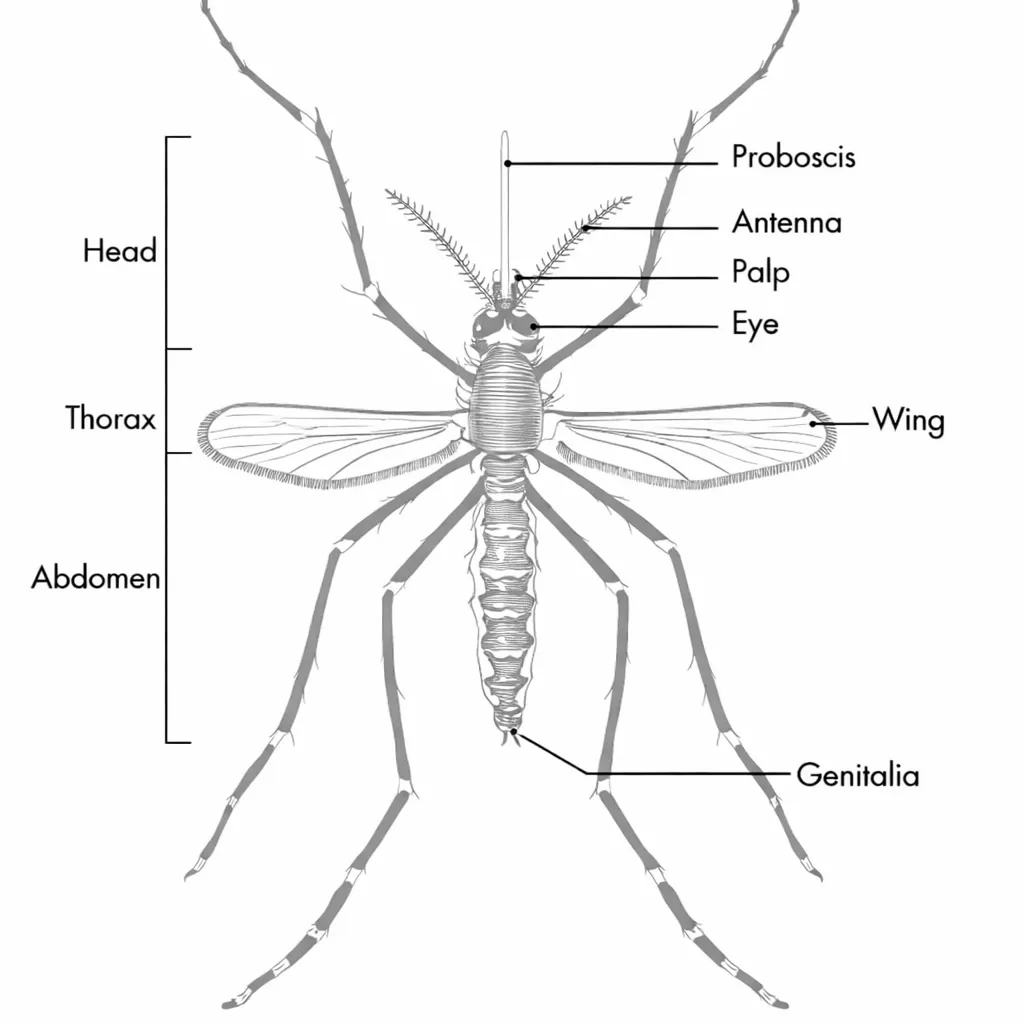
- They have two wings that are slightly longer than their body.
- Both males and females have antennae that they use to detect food sources.
- Both males and females use their proboscis (projecting, needle-like mouth part) to extract nectar and plant sap for everyday functions.
In addition, the females of most species use their proboscis to suck blood from humans and other vertebrates (except fish) to obtain proteins and iron for egg production and development.
- Females use other parts in their head (antennae, eyes, palps) to detect their prey.
Mosquitoes are sometimes mistaken for other types of insects that are harmless, such as midges (or gnats). So it is important to differentiate mosquitoes from other flying insects.
Physical Characteristics of Aedes aegypti
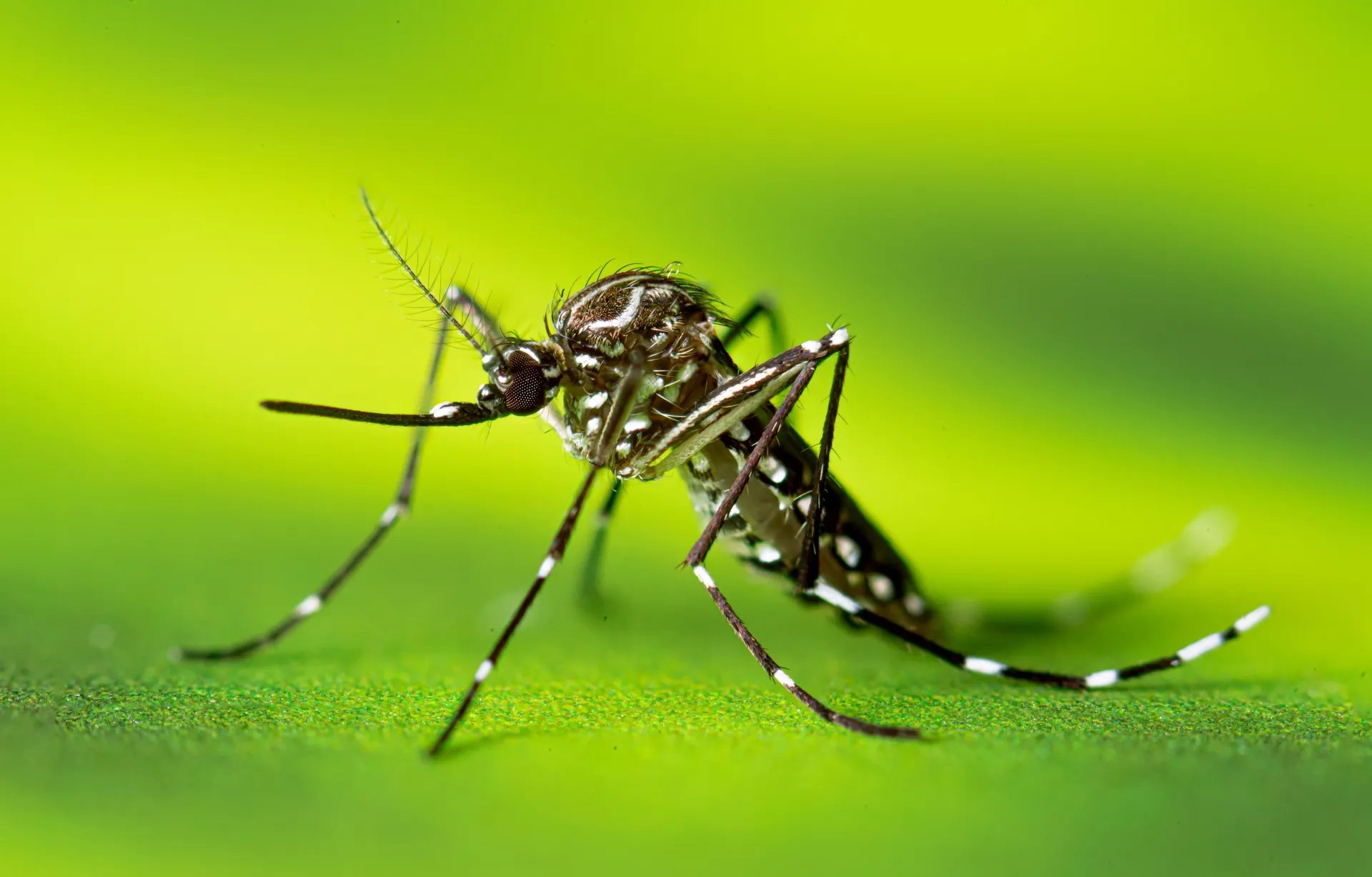
- A darker-colored body than other mosquitoes.
- Stripes on their body and legs.
- A slightly smaller size than other mosquitoes’.
Behavioral Characteristics of Aedes aegypti
Ironically, it is these mosquitoes’ behavior that gives them away. In Alameda County, if a mosquito bites a human during the day, it is probably an Aedes aegypti.
- They live in urban areas and prey on humans, outdoors and indoors.
- They are active during the day.
- They are very aggressive biters.
- They are fast flyers.
- They are well adapted to indoor conditions and can reproduce in receptacles with rooting plants, as well as in hard-to-reach places.
- Their tiny eggs (0.025 inch in length) are deposited as single entities (rather than in groups or “rafts”) and are therefore hard to detect. For comparison, the head of a pin measures between 0.04 inch and 0.08 inch.
- Females can deposit their eggs in very little water or in areas that are dry but may get moist or wet.
- Their eggs can dry out, but later hatch when conditions are favorable.
EXCLUSION AND PROTECTION
The best way to control mosquitoes in general, and Aedes aegypti in particular, is to exclude them and to protect oneself against them. Both UC Integrated Pest Management (UCIPM) and ACMAD offer advice for outdoor and indoor control, as well as use of repellents.
UC IPM offers tips in a short video; ACMAD offers tips on its website and on posters.
- Get rid of anything that is a potential breeding area for mosquitoes.
- Wear protective clothing: loose, long-sleeved shirts and long pants, socks and a hat.
- If possible, stay indoors when mosquito activity is highest.
- Activity patterns differ by species, seasons, and regions. It pays to know your mosquitoes!
- Note that Aedes aegypti is well adapted to human indoor environment. The best strategy is to prevent it from getting inside your home.
- Use EPA-approved repellents and other chemical methods, as needed.
Control Mosquitoes Outdoors
Specific recommendations from ACMAD include steps for control of any mosquito, information about Aedes aegypti, as well as resources for protection and abatement.
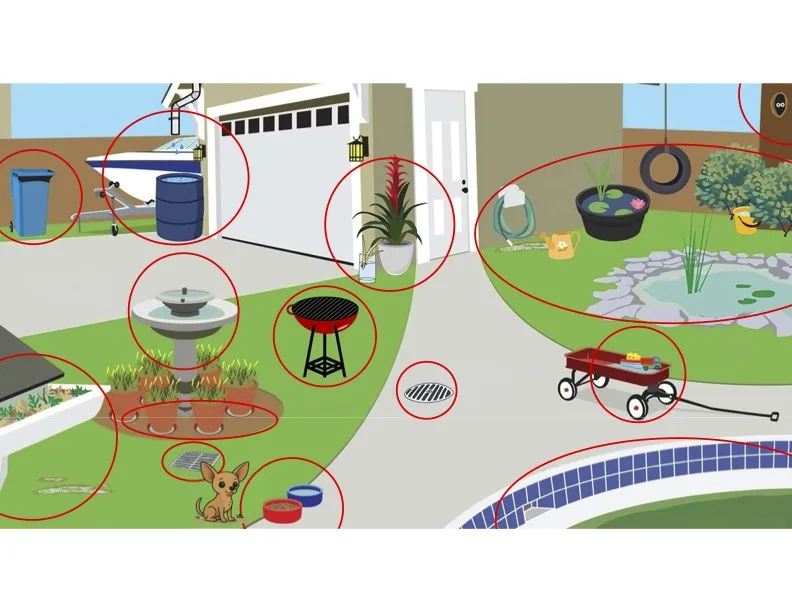
Cultural Controls:
Once a week, carefully check your outdoor space to eliminate any potential mosquito breeding area. This is especially important after a rain.
- Completely empty any container that is unused. Don’t overlook very small containers: mosquitoes can breed in as small a container as a bottle cap.
- At least once a week, change standing water in containers that are used for plants or wildlife. Bubbling water is fine: mosquitoes need standing water to lay their eggs.
- Completely and tightly cover large containers that cannot be emptied.
- Check for and clean out any clogged drains, including gutters.
- Around vent and plumbing pipe openings, use a screen with a small enough mesh to prevent adult mosquitoes from invading the crawl space of your home.
- Use fine-meshed screens on windows and doors.
Chemical Controls:
If a large container, such as a pond or a pool, cannot be covered and the water is not used for drinking, use a larvicide and follow all label instructions.
- Larvicides such as “Mosquito Dunks” or pellets that contain the active ingredient Bacillus thuringiensis israelensis (Bti) kill mosquito larvae (but not eggs or pupae) because larvae feed on microorganisms. Bti is harmless to other living things.
Biological Controls:
- Protect the organisms that feed on mosquitoes such as frogs, birds (swallows and swifts) and bats (such as the small brown bat).
- Consider using mosquito-eating fish in large containers with stagnant water (such as unused pools) to control mosquito larvae. Contact ACMAD to learn more about the use of Gambusia affinis to control mosquito larvae, how to obtain these mosquitofish from the District, and about general guidelines. The fish are low maintenance but need protection against some predators and chemicals. They cannot be released into natural bodies of water.
Control Mosquitoes Indoors
Block indoor access to mosquitoes and other flying pests:
- Keep doors and windows closed.
- Use air conditioning if available and needed, or use fans to keep cool.
- Install fine-meshed screens on windows and doors.
- Use a mosquito net over a bed.
- Inspect the containers that have standing water.
- Completely empty any container that is unused. Don’t overlook very small containers: mosquitoes can deposit their eggs in as small a container as a bottle cap.
- Every few days, change the water in containers that are used for plants, especially if the plants are rooting in a container or if you simply add water to a plant and the water collects in a saucer. Inspect the water and the plants. Aedes aegypti mosquitoes need very little water to deposit their tiny eggs singly. They can also deposit eggs in areas that are just above the surface of water, and their eggs can hatch within a few days, if the conditions are right.
The CDC recommends using an insecticide indoors if needed, along with exclusion.
Image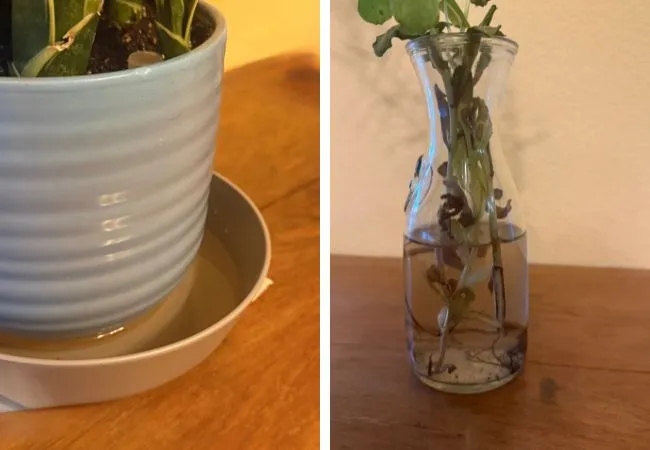
Common places where mosquitos can bred indoors. Right: Standing water in plant saucer. Left: plant rooting in standing water. (Photo: Mireille Giovanola, UC Master Gardener)
Protection and Repellents
Are you a “mosquito magnet”?
Female mosquitoes use different organs in their head (first graphic) to locate their prey.
- Compound eyes allow them to detect movement and light.
- Antennae allow them to detect air movement and levels of carbon dioxide.
- Palps allow them to detect odors on skin and in sweat.
Some people are more likely to attract mosquitoes and to have allergic reactions to their bite. An article written by J. Stromberg (updated in 2025) in the Smithsonian Magazine identifies some of the factors that could make you more attractive to mosquitoes. These include:
- Blood type. Type 0 seems to be more attractive than type A or B.
- Higher levels of carbon dioxide in breath.
- Human sweat with compounds such as ammonia and lactic acid.
- Higher body temperatures.
- Various types of bacteria on our skin.
- Alcohol consumption.
- Genetic factors that control body odor, for example.
Genetic factors are important because genes produce proteins (enzymes, many hormones, antibodies, etc.), and female mosquitoes get proteins from blood for egg production and development.
In addition, according to a recent article, both Aedes aegypti and Aedes albopictus are attracted to people who already are infected with Zika Fever and Dengue Fever. Infected people release a specific type of skin bacteria that are attractive to mosquitoes. This means that infected travelers who may not show signs of illness can attract Aedes aegypti females and help start an epidemic at home. Before traveling, it pays to visit the CDC site for recommendations about outbreaks of various diseases in the world and ways to protect oneself. There are vaccines against Yellow Fever and Chikungunya, but none so far against Zika Fever and Dengue Fever.
Repellents
Aside from exclusion and protective clothing, UC IPM recommends the use of repellents such as DEET, Picaridin, Oil of Lemon Eucalyptus. In addition to these repellents, ACMAD recommends the use of IR3535, para-menthane-diol, or 2-undecanone. The CDC advocates the use of vaccines, when available, and EPA-registered insect repellents, including Permethrin.
In addition, the CDC has these recommendations:
- The higher concentrations of DEET or Picaridin (i.e. 20 or 30%), the more effective the repellents are.
- When using insect repellent, apply sunscreen first if needed, then apply repellent on it.
- Do not apply insect repellent under clothes.
- In areas where mosquito-borne diseases are common, wear clothing and gear treated with permethrin. Follow label instructions.
- Sleep under a mosquito net, preferably one treated with Permethrin.
Note that there is always the danger that insects may become resistant to repellents and insecticides. Unfortunately, Aedes mosquitoes have been found to have some immunity to pyrethroids, the compound that is used in vector control.
REPORT MOSQUITO ACTIVITY TO ABATEMENT AGENCIES
In Alameda County, contact ACMAD for advice and abatement:
- For general information about mosquitoes and mosquito abatement.
- If you see mosquito activity indoors or outdoors.
- If you are bitten during the day, indoors or outdoors. Try to preserve the mosquito, so that:
- It can be positively identified.
- It can be tested for the presence of a virus.
In addition, you should report a dead bird to the California Department of Public Health (CDPH), especially during the months of April through October, as it could be a sign of the West Nile virus, spread by Culex mosquitoes (both C. pipiens, the “House mosquito” and Culex tarsalis, the “Encephalitis mosquito”). This virus is spread when mosquitoes acquire it from infected birds, then bite humans.
CONCLUSION
The best way to control mosquito activity is to educate oneself about mosquitoes, their impact on human health and the health of other vertebrates, and the measures one can take to protect oneself and help abate them.
- Learn to identify mosquitoes, especially Aedes aegypti.
- Protect yourself and your environment from mosquitoes.
- Contact the Alameda County Mosquito Abatement District for any concerns you may have about mosquito abatement.
- Look at the various sites that are referenced in this article.
- Talk with your neighbors and share information about mosquitoes with them.
The organizations listed under Resources below provide crucial guidelines for outdoor and indoor control, and for personal protection.
RESOURCES:
ACMAD (Alameda County Mosquito Abatement District)
ACMAD, www.mosquitoes.org and (510) 783-7744.
Your local abatement organization in Alameda County.
- Provides identification of mosquitoes and mosquito look-alikes.
- Offers visual aids for mosquito exclusion in gardens.
- Provides up-to-date information about Aedes aegypti.
- Offers advice about and abatement of mosquitoes in Alameda County.
CDC (Centers for Disease Control and Prevention)
An absolute go-to site if you are traveling and need information about diseases, prevention, and after-trip care: https://wwwnc.cdc.gov/travel or CDC
This EPA/CDC document spells out the measures that are used for mosquito control.
The CDC provides information about the following:
- Different mosquito-borne diseases, symptoms, prevention, and control:
https://www.cdc.gov/mosquitoes/prevention/preventing-mosquito-bites-while-traveling.html
- The following diseases that are spread by Aedes aegypti:
Chikungunya: https://www.cdc.gov/chikungunya/about/index.html
Dengue Fever: https://www.cdc.gov/dengue/about/index.html
Yellow Fever: https://www.cdc.gov/yellow-fever/about/index.html
Zika Fever: https://www.cdc.gov/zika/
- St. Louis Encephalitis, a disease spread by Culex: https://www.cdc.gov/sle/about/
- Use of Permethrin as a mosquito repellent:
https://www.cdc.gov/mosquitoes/prevention/about-permethrin-treated-clothing-and-gear.html
CDPH (California Department of Public Health)
https://www.cdph.ca.gov/Programs/CID/DCDC/Pages/MosquitoesandMosquitoBorneDiseases.aspx
- Provides much of the same information about mosquito-borne diseases that is provided by the CDC, but with a focus on California.
- Includes up-to-date and interactive maps.
- A useful, but outdated poster shows different mosquito species and their behavior: https://www.cdph.ca.gov/Programs/CID/DCDC/CDPH%20Document%20Library/GuidetoImportantMosquitoesinCA.pdf
In addition, the website provides information about two diseases spread by Culex pipiens and Culex tarsalis and how to report a dead bird:
- West Nile Fever
https://www.cdph.ca.gov/Programs/CID/DCDC/Pages/WestNileVirus.aspx#
- St. Louis Encephalitis
https://www.cdph.ca.gov/Programs/CID/DCDC/Pages/SLE.aspx
- Video: How to report a dead bird: https://www.youtube.com/watch?v=Y36FjUURYr
UCANR (University of California, Agriculture and Natural Resources), especially UC IPM
Provides information about mosquitoes, including Aedes aegypti, about various means to abate mosquitoes, and the approved use of mosquito repellents by the Master Gardener organization. UCANR focuses on the use of IPM (Integrated Pest Management).
- “IPM combines several methods to prevent and manage pest problems while reducing risks to you, your family, and the environment. Correctly identifying the pest is key to knowing whether a pest is likely to become a problem and determining the best management methods.” Source: UC IPM and https://ipm.ucanr.edu/home-and-landscape/what-is-ipm/#gsc.tab=0
- https://ipm.ucanr.edu/home-and-landscape/mosquitoes/#gsc.tab=0
- Short video (1:37 minutes) on mosquito control: https://www.youtube.com/watch?v=sqZhxcIeICM
AMCA (The American Mosquito Control Association)
https://www.mosquito.org/vector-borne-diseases/
Background information on various viruses spread by Aedes aegypti, as well as diseases spread by other mosquitoes.
Want to learn more?
This blog post is brought to you by the Help Desk of the UC Master Gardeners of Alameda County. Subscribe to our blog!
Have a Gardening Question? We'll Help.
Visit our Help Desk page to submit your question and see additional ways you can reach us.